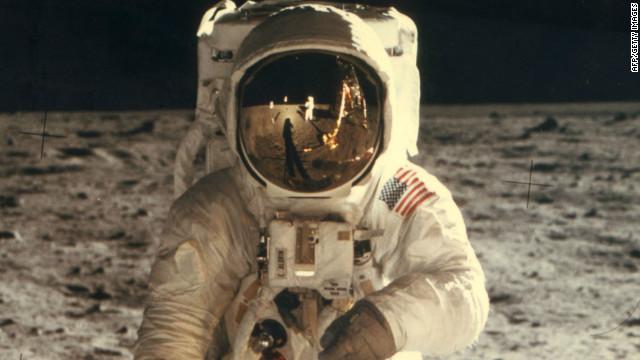
 Astronaut Neil Armstrong is seen in the reflection of Edwin 'Buzz' Aldrin's helmet during the pair's historic walk on the surface of the moon on July 20, 1969.
 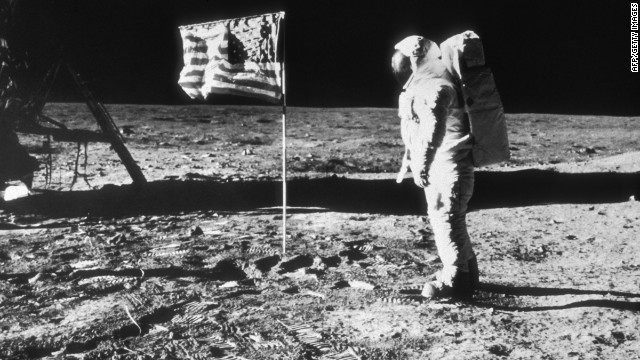 Armstrong and Aldrin spent roughly two hours on the moon's surface. The photos of the moonwalk were taken by Armstrong.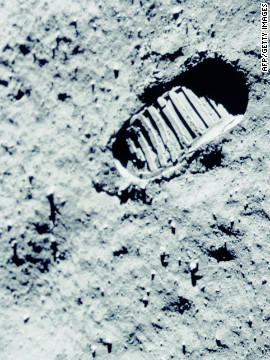
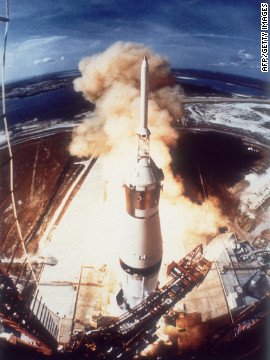
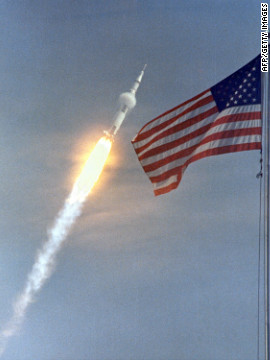
 The astronaut crew of the Apollo 11 mission are pictured in May 1969. Left to right are Neil Armstrong, commander; Michael Collins, command module pilot; and Edwin 'Buzz' Aldrin, lunar module.
 - NEW: Neil Armstrong is remembered as a "true American hero"
- He set foot on the moon in 1969
- "That's one small step for man, one giant leap for mankind," Armstrong said
- He largely avoided the public spotlight
(CNN) -- Neil Armstrong, the first man to walk on the moon, has died, his family said Saturday. He was 82.
"We are heartbroken to share the news that Neil Armstrong has passed away following complications resulting from cardiovascular procedures," Armstrong's family said in a statement obtained by CNN affiliate WKRC.
Armstrong underwent heart surgery this month.
"While we mourn the loss of a very good man, we also celebrate his remarkable life and hope that it serves as an example to young people around the world to work hard to make their dreams come true, to be willing to explore and push the limits, and to selflessly serve a cause greater than themselves," his family said.
Armstrong gives rare interview to Australian accountant

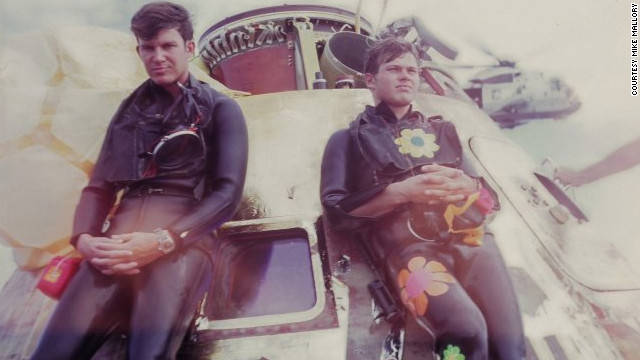 Navy SEALs Wes Chesser, left, and John Wolfram pause after securing the Apollo 11 capsule on July 24, 1969. Wolfram wore 60s "Flower Power" decals, showing his rebellious side. Chesser says, that only now does he realize how physically demanding the mission was. "We were in such good shape."
 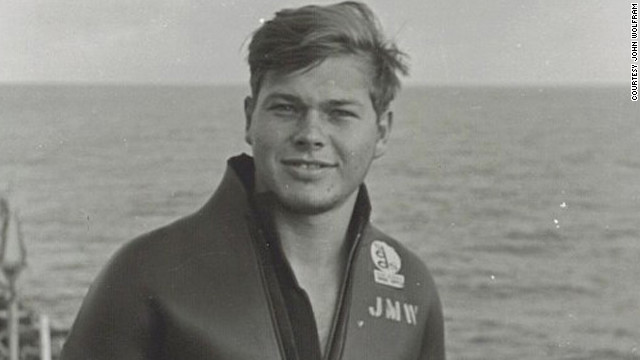 At age 20, only two years out of high school, Wolfram was the youngest of an elite team responsible for safely getting the Apollo 11 crew from their capsule to a helicopter. "Being the first to look them in the eye and see that they're OK -- it's quite a rush," Wolfram told CNN.
 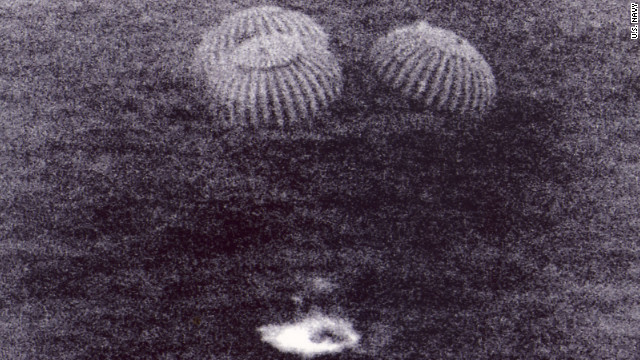 In this U.S. Navy photo, Apollo 11 splashes down about 1,000 miles off Hawaii. It was the exact moment when America achieved President Kennedy's goal to land a man on the moon and return him to Earth, says Scott Carmichael, author of "Moon Men Return." "It's one thing to get the astronauts to the moon, but you've got to bring them back alive."
 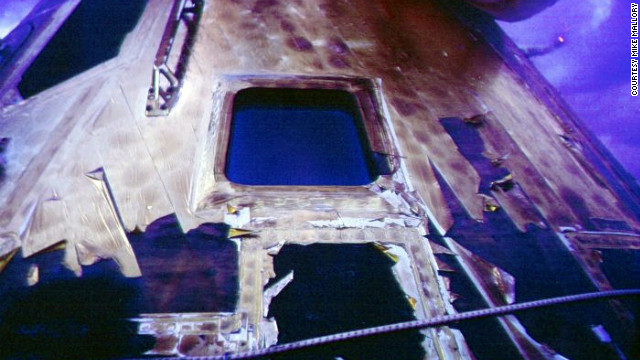 Carmichael described the capsule as "a bobbing, 12-foot high, 12,000-pound, spinning, behemoth" drifting across the ocean current. Frogman Mike Mallory, who snapped many photos of the mission, says he and Wolfram were "muscle guys" who worked against the waves and wind to pull an inflatable ring around the capsule.
 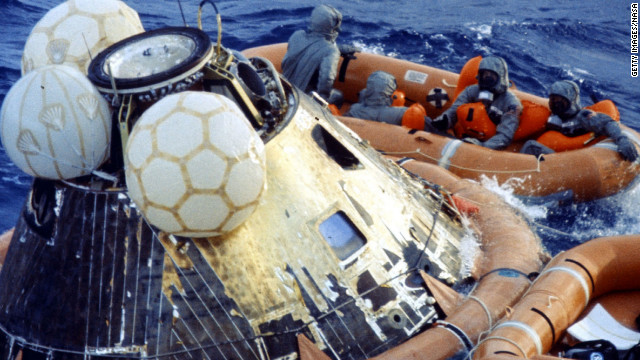 After the capsule was stabilized, the astronauts and SEALs put on biological isolation garments to guard against possible lunar pathogens. If the SEALs had been been directly exposed to the astronauts, they would have been ordered to be quarantined.
 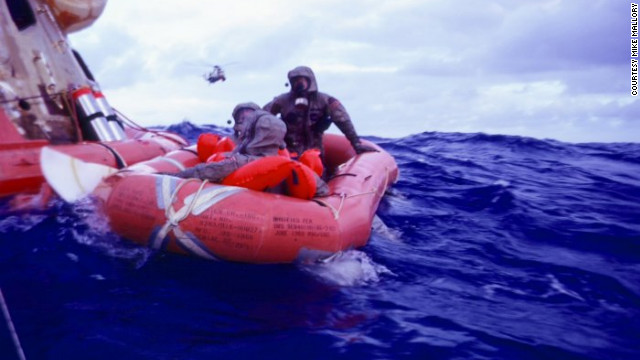 In the "decontamination raft" mission leader Clancy Hatleberg sprayed the astronauts with sodium hypochlorite and helped them scrub their suits.
 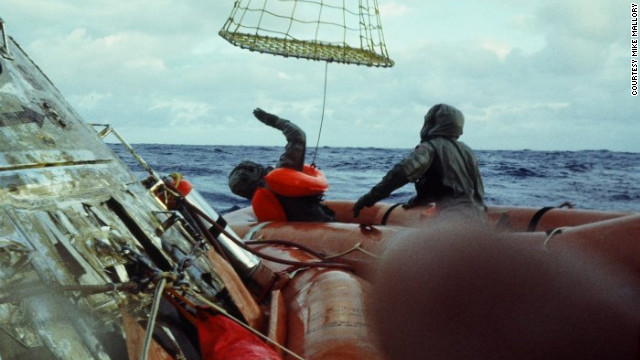 Hatleberg helped the astronauts climb into a "Billy-Pugh net" which was used to hoist them into a Navy chopper hovering above.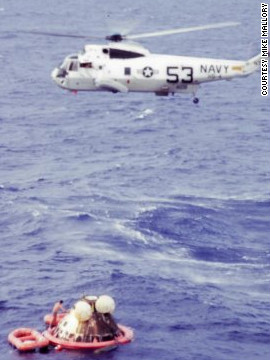
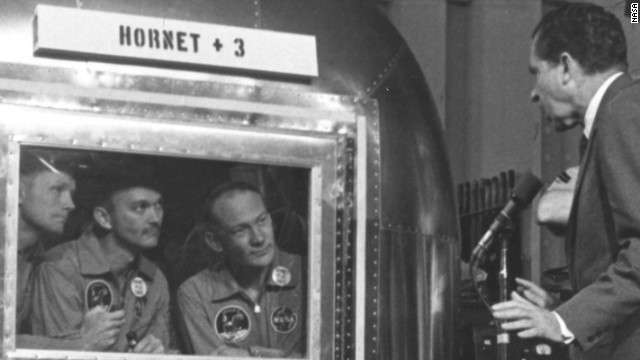 Aboard the aircraft carrier, the trio spoke with President Nixon from inside a trailer where they would be quarantined without incident for 21 days. "I saw you bouncing around in that boat out there," Nixon told them. "I wonder if that wasn't the hardest part of the journey." Armstrong, left, replied, "It was one of the hardest parts."
 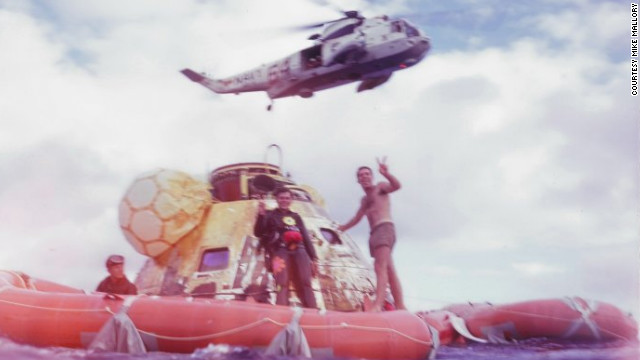 Back at the capsule, Wolfram and Hatleberg, right, flashed peace signs for Mallory's camera -- which raised eyebrows at the height of the Vietnam War. But Wolfram heard nothing about it from his superiors. "John was a wild, crazy guy," said Mallory. "That was his thing."
 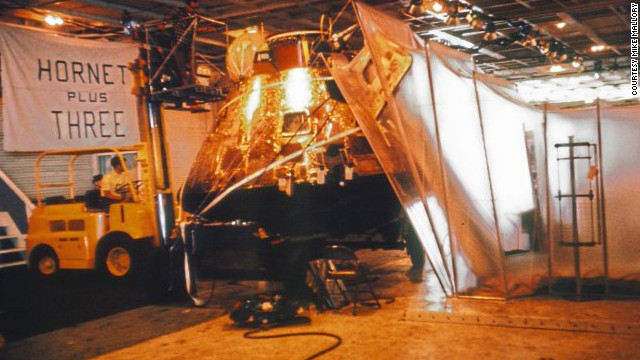 The capsule hatch was locked and sealed before the spacecraft was hoisted aboard the Hornet and kept in its own quarantine area, just in case. "We all took strips of that gold foil as souvenirs," said Wolfram.
  After two tours in Vietnam, Wolfram returned to the U.S. and had an epiphany during a church service. "That night, my life changed," he says. Now a Georgia-based husband, father and ordained minister, Wolfram serves as a missionary in Southeast Asia.
 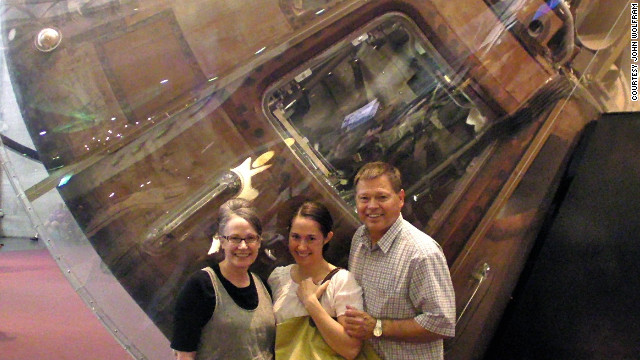 Wolfram details his adventure in his memoir, "Splashdown." He recently took his family to Washington's Smithsonian National Air and Space Museum where the Apollo 11 capsule is on display.
 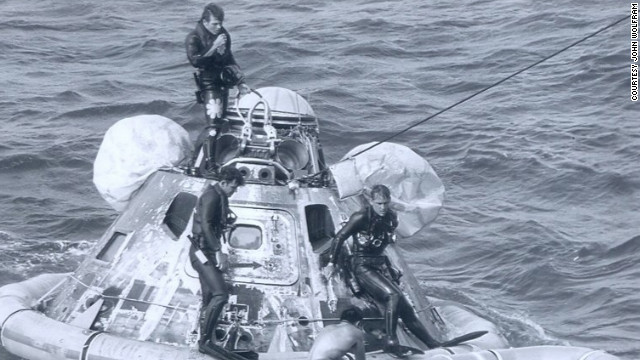 Mallory, now a husband and grandfather in Michigan, says he was just proud to be a part of the space program as a member of SEAL Team Swim 2. "I wish the space program was continuing better than it is." Chesser, a retired defense contractor, is a newlywed and grandfather living in Virginia. The Space Race "was an extremely exciting time for our country," Chesser says. "Today we don't have that."


 Apollo 11: The Recovery
  'One giant leap for mankind'
 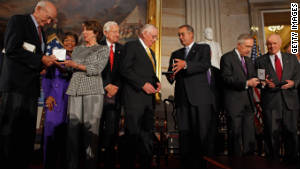 2011: Armstrong among astronauts honored
 "For those who may ask what they can do to honor Neil, we have a simple request. Honor his example of service, accomplishment and modesty, and the next time you walk outside on a clear night and see the moon smiling down at you, think of Neil Armstrong and give him a wink."
He and fellow astronauts Buzz Aldrin and Michael Collins blasted off in Apollo 11 on a nearly 250,000-mile journey to the moon that went down in the history books.
It took them four days to reach their destination.
Time: Life up close with Apollo 11
The world watched and waited as the lunar module "Eagle" separated from the command module and began its descent.
Then came the words from Armstrong: "Tranquility Base here, the Eagle has landed."
About six and a half hours later at 10:56 p.m. ET on July 20, 1969, Armstrong, at age 38, became the first person to set foot on the moon.
He uttered the now-famous phrase: "That's one small step for man, one giant leap for mankind."
Tributes to Armstrong began pouring in Saturday as word of his death spread.
"Neil Armstrong was a true American hero, both because of his extraordinary service to his country and the honorable life he led. He was a groundbreaking Naval aviator and the world's most famous astronaut, but it was his humble and gracious response to the torrent of attention that followed his accomplishments that may have set him apart most," said Ohio Sen. Rob Portman.
Armstrong was born in Wapakoneta, Ohio, on August 5, 1930.
After his historic mission to the moon, Armstrong worked for the National Aeronautics and Space Administration (NASA), coordinating and managing the administration's research and technology work.
In 1971, he resigned from NASA and taught engineering at the University of Cincinnati for nearly a decade.
While many people are quick to cash in on their 15 minutes of fame, Armstrong largely avoided the public spotlight and chose to lead a quiet, private life with his wife and children.
But he always recognized -- in a humble manner -- the importance of what he had accomplished.
"Looking back, we were really very privileged to live in that thin slice of history where we changed how man looks at himself and what he might become and where he might go," Armstrong said.
'Muscle guys' who brought Apollo 11 home
CNN's Tricia Escobedo contributed to this report.

No comments:
Post a Comment